Event timing · October 18, 2026
How Long Should You Book a Matcha Cart for a Tampa Event?
A 5:30 start sounds simple—until nine guests arrive together, the first round becomes a second, and the class, toast or presentation starts on time whether the drinks are ready or not. The right service window is less about the clock than the shape of the room.
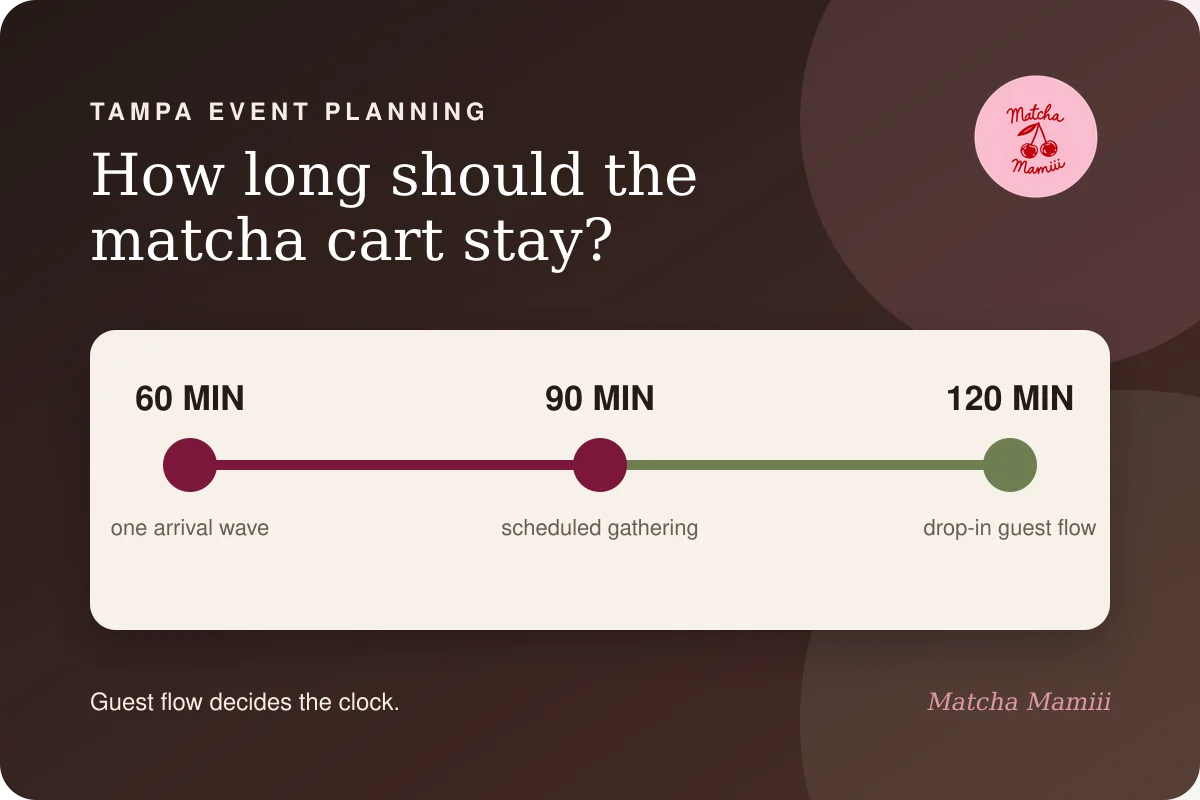
The concise answer: plan on 60–90 minutes for a small, scheduled gathering and about two hours when guests arrive gradually, the bar is part of a larger event, or repeat drinks are likely. The final window should be built from guest count, arrival pattern, menu and what happens immediately before and after service.
The question is not only “How many guests?”
Two events with the same headcount can need very different service windows. A private group that walks in together creates one concentrated rush. An apartment resident event may have guests drifting through over two hours. A corporate appreciation bar can sit between the two: an early wave, a quieter middle and another rush after a meeting ends.
That is why a useful quote should include more than attendance. It should identify when guests can order, whether everyone breaks at once and whether the bar must close before another part of the program begins.
A practical starting point by event style
| Event pattern | Starting service window | Why |
|---|---|---|
| Small private gathering with one arrival time | 60–90 minutes | A focused menu and coordinated start keep the experience intimate without leaving the bar open unnecessarily. |
| Corporate appreciation or wellness activation | 90 minutes–2 hours | Guests often come in waves around meetings, shifts or class schedules. |
| Apartment resident event or open house | About 2 hours | A longer window gives residents flexibility to stop by without one crowded rush. |
| Wedding cocktail hour, dessert or late-night moment | Match the programmed segment | The bar should open and close around the timeline—not compete with entrances, speeches or dinner service. |
These are planning ranges, not promises of how many drinks can be made in a fixed time. Menu complexity, staffing, access and repeat orders all change the pace. Use our drink-count guide alongside the clock.
Setup time is not service time
If the proposal says one hour of service, that should mean one hour in which guests can order—not one hour that includes unloading, styling the bar and breaking it down. Matcha Mamiii plans arrival, setup and cleanup around the quoted service window so hosts know what guests are actually receiving.
Venue details still matter. Long load-ins, elevators, distant parking, outdoor weather plans and limited power can change when the team must arrive. Review the mobile bar venue checklist before finalizing the schedule.
Three questions that usually settle the answer
- Will guests arrive together or drift in? One wave can be served in a tighter window; staggered traffic needs more breathing room.
- Is the bar the main activity or one part of the event? If a class, presentation or ceremony follows, build a clear last-call time.
- Do you expect one drink per person or repeat visits? A relaxed social setting may invite a second round, especially when both matcha and espresso are offered.
What to send when requesting a quote
Share the date, Tampa Bay venue, expected guest count, event start time, indoor or outdoor setting and the part of the program when you want drinks served. If the schedule is still flexible, say so. A good recommendation can compare a shorter concentrated service with a longer open-house format before you spend more time than the event needs.
See current package starting points and the planning estimator, explore the event drink menu, or get a tailored quote. Matcha Mamiii replies within one business day, and the date is held after the proposal is accepted and the stated deposit is paid.