Corporate planning · October 21, 2026
The Matcha Menu Is Approved. Procurement Still Has Questions.
The organizer has the date. The team likes the drinks. Then accounting asks for a W-9, the venue asks about insurance and security wants a load-in time. The bar has not moved an inch, but the booking can still stall.
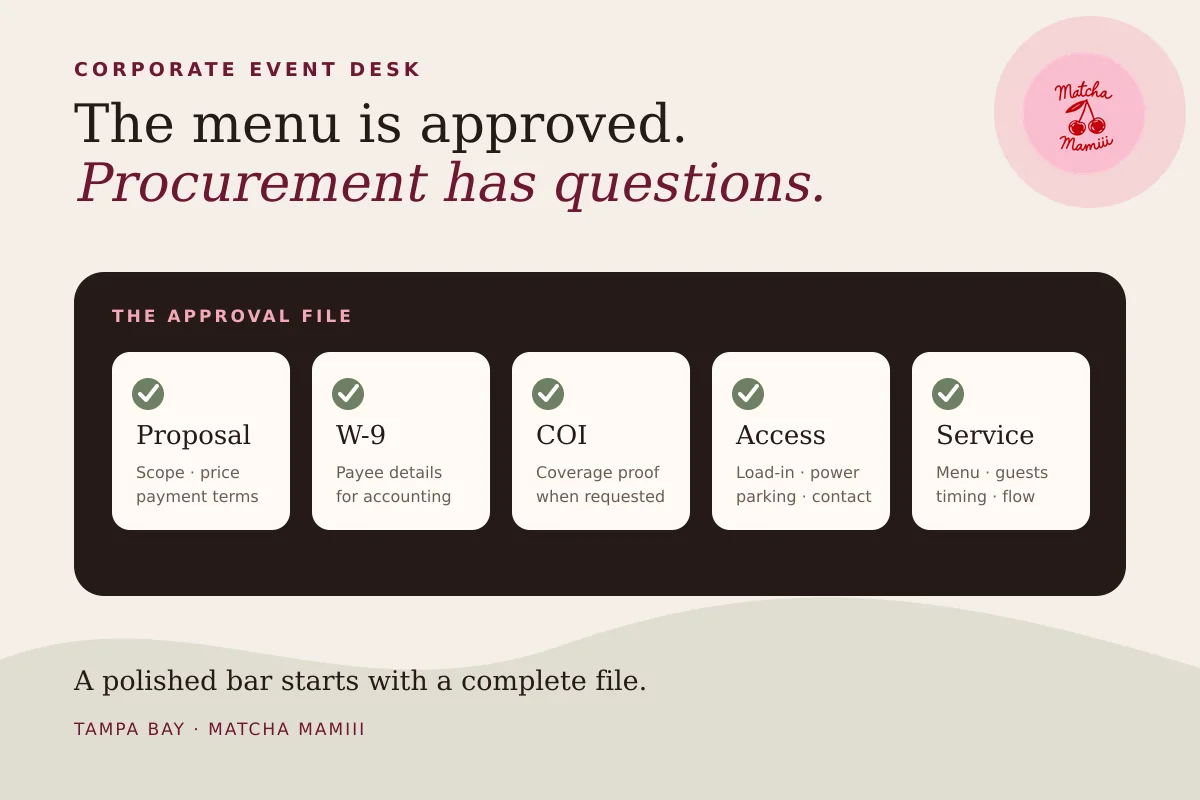
The concise answer: before approving a mobile coffee or matcha bar, a corporate planner may need a written proposal, vendor and payee details, a W-9, a certificate of insurance when required, clear invoice terms, and a venue plan covering access, power, parking and the onsite contact. Ask for those requirements before the deposit so procurement and hospitality move on the same timeline.
The invisible part of corporate catering
A private host can often approve an event in one conversation. A company may involve the organizer, a manager, accounts payable, facilities, security and the venue. Each person is solving a different problem: guest experience, budget authority, payment, safety and building access.
That does not mean every office event needs a thick vendor packet. It means the organizer should discover the approval path early. A complete file makes a premium experience easier to buy because nobody has to chase basic details after the date is nearly gone.
What belongs in the approval file
| Item | What it answers | When to confirm it |
|---|---|---|
| Written proposal | Scope, guest estimate, menu, service window, setup, cleanup and total investment | Before internal approval |
| W-9 or payee record | The vendor identity and taxpayer information accounting may need | During vendor setup—not by ordinary unsecured email unless the company’s process requires it |
| Certificate of insurance | Evidence of the coverage requested by the company or venue | Before final venue approval |
| Invoice and payment terms | Deposit, balance due date, accepted payment method, tax and approved charges | Before the purchase request is submitted |
| Venue access plan | Parking, loading, elevators, security, power, shelter and onsite contact | Before arrival time is promised |
| Service plan | Guest flow, menu complexity, ordering window and staffing assumptions | Before the quote becomes final |
A W-9 is not an invoice
The IRS describes Form W-9 as the form a requester uses to obtain a U.S. payee’s taxpayer identification number and certain certifications. The completed form goes to the requester rather than being sent to the IRS. An invoice is different: it tells the client what is being purchased, what is owed and when payment is due.
Corporate organizers should ask accounts payable which documents their system requires and where sensitive tax information should be uploaded. Vendors should not improvise a delivery method simply because the event date is close.
A COI is evidence—not the entire safety plan
A certificate of insurance, often shortened to COI, summarizes insurance information requested by a client or venue. The exact wording, limits and additional-insured requirements can vary. For example, the City of Tampa says events held on City property require an insurance certificate naming the City as an additional insured; that rule should not be presented as a universal requirement for every private office or apartment event.
The practical move is to forward the venue’s written insurance instructions early. If the venue needs a specific entity name, address or endorsement, vague wording like “bring insurance” is not enough.
Licensing questions should match the service model
Florida food-business oversight depends on what the vendor prepares, how it operates and which regulator covers that model. FDACS directs mobile vendors with food service to DBPR resources while also maintaining separate food-establishment permit information. A planner should ask for the documentation relevant to the actual operation instead of assuming every cart, caterer and retail food business carries the same license.
That distinction protects both sides: the host gets a direct answer, and the vendor is not asked to claim a permit category that does not describe the business.
The six-email chain a better inquiry can prevent
When requesting availability, include the company and venue name, event date, guest estimate, ordering window, indoor or outdoor setting, load-in rules and the documentation your organization expects. If procurement uses a vendor portal or purchase order, say that before the proposal is issued.
Then send the operational details to one venue contact. Our mobile bar venue checklist covers space, power, water, parking and weather. The service-capacity guide explains why the busiest 15 minutes matter more than the total headcount.
Professional does not have to mean complicated
A polished corporate booking can still feel simple: one scope, one approval file, one onsite contact and one service plan. Matcha Mamiii’s corporate event page outlines the hosted experience; the pricing page gives planning ranges; and the FAQ addresses invoicing, insurance, venue needs and deposits.
Send the date, venue, guest count and required vendor documents. Matcha Mamiii replies within one business day with availability and the next approval step—so the bar and the paperwork can arrive ready.
Primary sources: IRS Form W-9 guidance; City of Tampa special-event insurance guidance; Florida mobile food vendor guidance. Requirements vary by organization, venue and operating model; this planning guide is not legal, tax or insurance advice.