Service capacity · October 20, 2026
Sixty Guests. Fifteen Minutes. Can a Mobile Matcha Bar Keep Up?
At 9:55, the lobby is quiet. At 10:00, a meeting releases and sixty people want a drink before the next session. The headcount did not change. The service problem did.
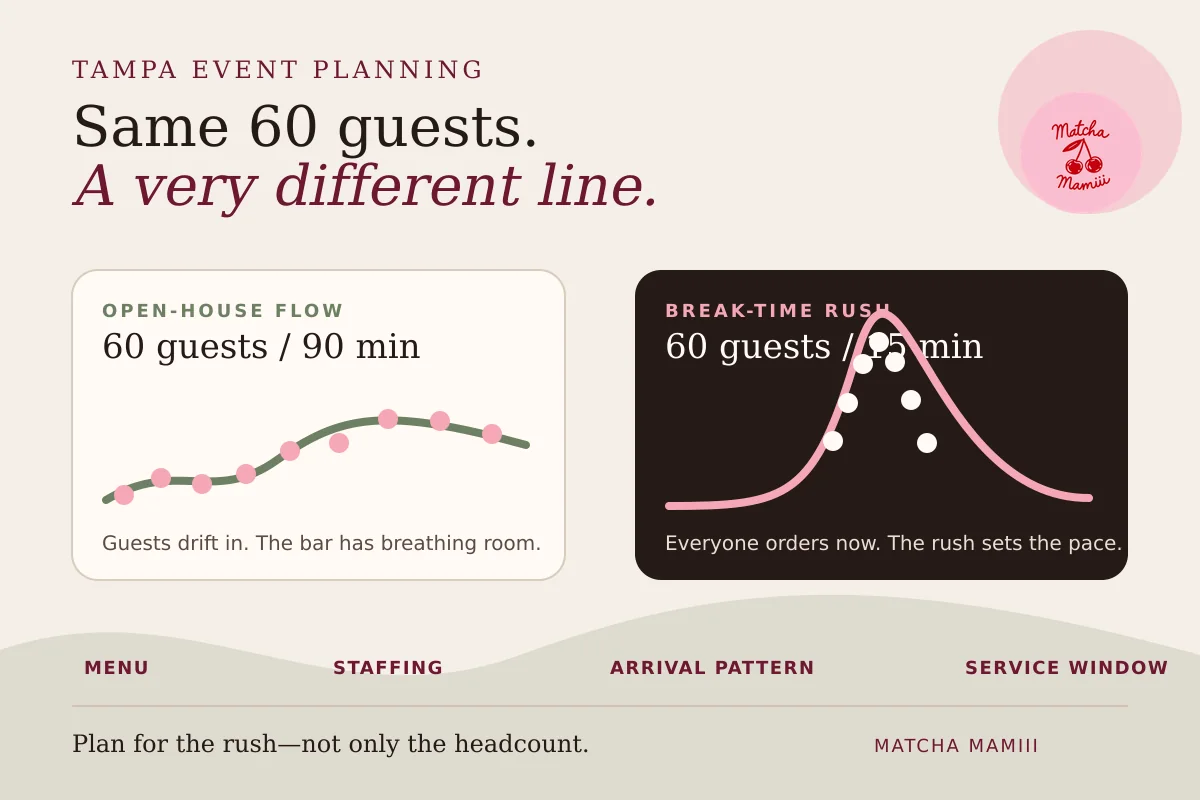
The concise answer: a responsible mobile bar should not promise one universal drinks-per-hour number. Capacity depends on the drinks being made, the number of working service positions and—most importantly—whether guests arrive steadily or all at once. Ask for a plan built around your event’s busiest 15 minutes, not only its total headcount.
“Per hour” hides the moment that matters
Sixty guests across a 90-minute apartment open house may create a comfortable rhythm. The same sixty guests released from an office meeting, Pilates class or conference session at once can create a line immediately. Queueing research on batch arrivals reaches the same practical conclusion: customers arriving in groups put different pressure on a service system than the same volume arriving individually.
That makes arrival pattern a better planning input than a generic capacity claim. When requesting a quote, tell the caterer whether guests drift in, arrive at one start time or come in several scheduled waves.
What changes the pace behind the bar
| Planning factor | Why it changes service |
|---|---|
| Menu size | A focused two-drink menu reduces decisions and ingredient changes; a broad matcha-and-espresso menu creates more pathways. |
| Drink build | Espresso extraction, whisked matcha, flavored layers, cold foam and finishing each add distinct steps. |
| Staffing and stations | Another trained person helps only when the workspace, equipment and handoff area let both people work without colliding. |
| Guest choices | Multiple milks, sweetness levels and customizations improve flexibility but can slow a concentrated rush. |
| Venue flow | A narrow doorway, distant water source or single ordering point can become the bottleneck even when drink preparation is efficient. |
The Specialty Coffee Association maintains standards covering equipment performance, professional skills and operational practices. That is a useful reminder that speed is a system—not just one fast motion by one barista.
Four ways a host can protect the experience
- Share the actual release pattern. “Sixty guests” is incomplete. Say whether they have 15 minutes, 45 minutes or an open 90-minute window.
- Choose a focused event menu. Feature a small set of signature drinks, then decide in advance which milk and sweetness alternatives are essential. Our Tampa event-menu guide explains the tradeoff.
- Stagger service when the program allows it. Opening before a meeting ends, inviting departments in waves or keeping the bar open after the first rush can prevent a single surge.
- Staff the busiest window. If the schedule cannot move, the proposal should address the rush with the right service layout and staffing—not pretend the line will solve itself.
What to ask before paying a deposit
Ask what the quoted plan assumes about arrival time, menu, number of service positions and ordering window. Then ask what changes if everyone arrives together. A credible answer may simplify the menu, adjust service time, add labor or recommend a different flow. It should not rely on an unexplained “drinks per hour” boast.
Use the drink-count guide to estimate total volume, then compare the 60-, 90- and 120-minute service formats. Corporate planners can also review Matcha Mamiii’s workplace event service and planning ranges.
Send the four details that reveal the real job
For a capacity recommendation, send the date, venue, expected guest count and the shortest window in which most people will order. Add your preferred drinks and whether the event is indoors or outdoors. Get a tailored Matcha Mamiii quote; the response arrives within one business day and will recommend a service plan rather than sell you a made-up universal number.
Sources: Specialty Coffee Association coffee standards; “How to Staff When Customers Arrive in Batches” (academic queueing research). Neither source publishes a universal drinks-per-hour benchmark for mobile event bars.