Menu planning · October 23, 2026
One Guest Says Dairy-Free. Another Says Nut Allergy. Can the Same Matcha Bar Serve Both?
The host checks “oat milk” off the list and assumes the dietary question is finished. Then one guest mentions a tree-nut allergy, another asks whether the cookie butter contains wheat, and the bar team needs a better answer than “it should be fine.”
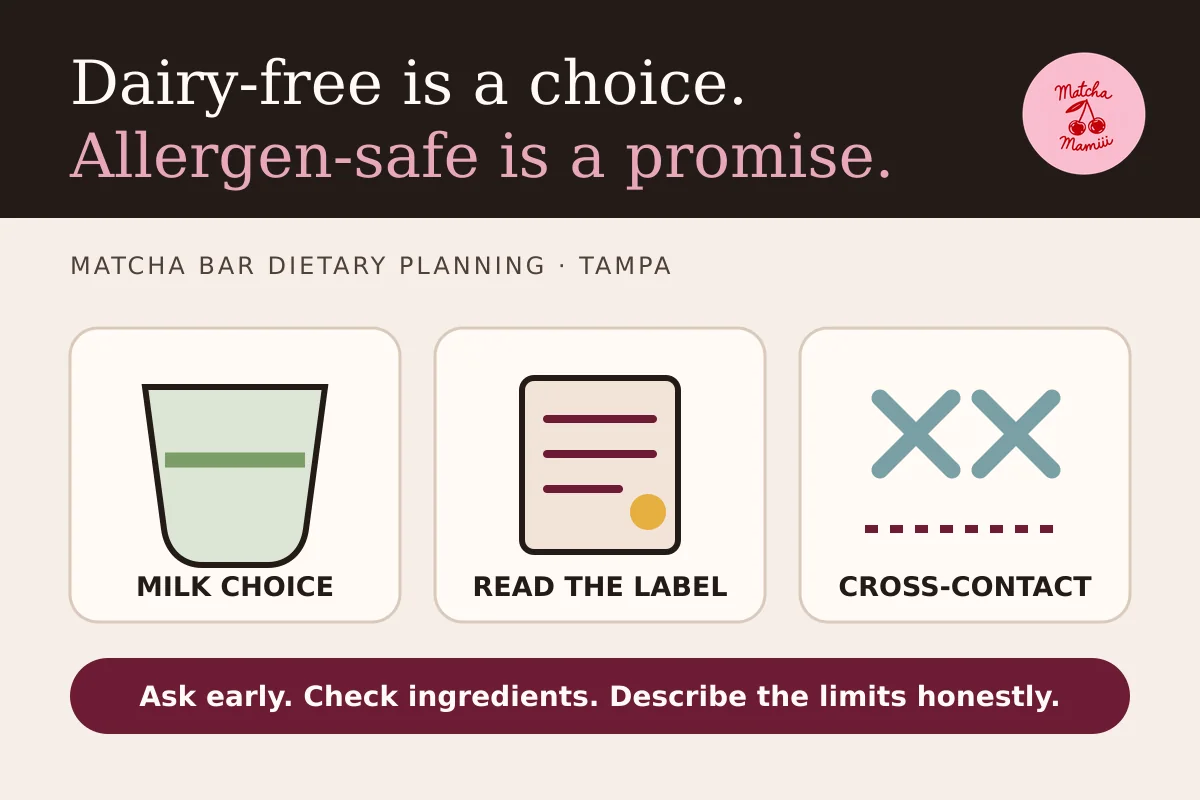
The concise answer: a Tampa matcha bar can offer dairy-free milk, but “dairy-free” does not mean “allergen-free.” Plant-based alternatives may involve tree nuts, soy, oats, seeds or other ingredients, and shared pitchers, tools and surfaces can create cross-contact. Hosts should collect dietary needs early, ask which products will be used, and let the vendor describe honestly what can—and cannot—be accommodated.
The milk swap is only the first question
Matcha itself is not the whole drink. Milk, syrups, cold foam, drizzles and flavored components each bring their own ingredient list. Replacing whole milk with oat milk may remove dairy from one build, but it does not answer whether another ingredient contains milk, wheat, soy, sesame or a tree nut.
The U.S. Food and Drug Administration identifies nine major food allergens: milk, egg, fish, crustacean shellfish, tree nuts, peanuts, wheat, soybeans and sesame. Several are relevant to a beverage bar even when no baked goods are served. That is why the product label—not the color of the carton or a menu nickname—has to settle the ingredient question.
Plant-based does not describe one ingredient
FDA guidance notes that plant-based milk alternatives can be made from nuts, seeds, rice, coconut, oats or legumes such as soy. Those products also vary by processing and added ingredients. “Alternative milk” is therefore a category, not one interchangeable recipe.
| Option | What the host should know | Question to ask |
|---|---|---|
| Whole milk | Contains milk, a major allergen | Will dairy and plant-based drinks use shared tools? |
| Oat milk | Plant-based, but the exact ingredient and gluten statements depend on the product label | Which brand and carton will be used? |
| Almond milk | Contains almond, a tree nut | Are any guests avoiding tree nuts? |
| Flavor syrups and toppings | May introduce additional allergens that the base milk does not | Can the vendor check every component in the selected drinks? |
Matcha Mamiii’s current menu lists whole, oat and almond as milk options, with availability subject to the event plan. The mobile bar is not represented as an allergen-free kitchen, and cross-contact is possible.
“Can you make it?” and “Can you make it safely?” are different
A bar may be physically able to pour oat milk into a drink. That does not automatically mean it can promise separation suitable for a severe allergy. Pitchers, measuring tools, whisking equipment, storage bins, ice handling and the working surface all matter. So do the syrups that were prepared before the cart arrived.
A trustworthy vendor should not turn uncertainty into reassurance. If the setup cannot eliminate cross-contact, the useful answer is to say so before the event. The guest and host can then make an informed decision instead of discovering the limitation at the bar.
A practical intake for the host
- Ask about dietary needs before finalizing the menu. “Any restrictions?” is more useful than waiting for guests to improvise at service.
- Separate preferences from allergies. Someone choosing oat milk for taste is not asking the same operational question as someone reporting a serious milk or nut allergy.
- Send the exact request to the vendor. Avoid translating it into “vegan-friendly” or “healthy”; share the ingredient or allergen the guest named.
- Choose the event menu before the labels are reviewed. A focused menu makes it easier to verify each milk, syrup, foam and topping.
- Keep an honest fallback. If a safe accommodation cannot be confirmed, do not pressure the guest to accept a drink.
Fewer choices can create better hospitality
Offering every milk at every event sounds generous, but it can add cartons, decisions, tool changes and possible cross-contact points during a rush. A more thoughtful plan may feature one dairy build and one plant-based build, identify their ingredients in advance, and reserve additional changes for requests the setup can actually support.
That approach also protects service speed. Our guide to building a focused event menu explains why every customization affects the line, while the service-capacity guide shows why the busiest 15 minutes matter more than the total headcount.
Send the dietary question before the deposit
For a useful answer, send the event date, Tampa Bay venue, guest count, selected drinks and any known allergies or dietary requests. Ask which milk and flavored components are planned, whether substitutions are available, and what cross-contact limitations apply. Matcha Mamiii’s FAQ states the current policy plainly.
Get my quote and include the dietary needs in the notes. Matcha Mamiii will reply within one business day with the menu options it can support—without turning “dairy-free” into a promise the mobile setup cannot make.
Primary sources: FDA food-allergy guidance, updated March 11, 2026; FDA plant-based milk alternatives guidance; FDA food-allergen labeling guidance. This planning guide is not medical advice; guests with allergies should follow their own clinician’s guidance.